Common Name
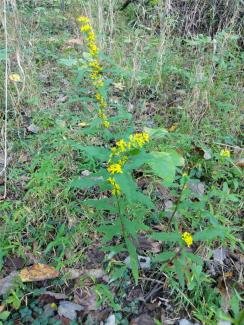
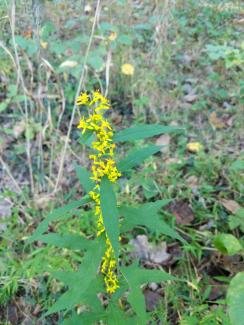
Bluestem goldenrod
Blue-stemmed goldenrod
Wreath goldenrod
Axillary goldenrod
Plant Form
Herbs
Duration
Perennial
Max Height (ft)
5.0
Region
Coastal
Piedmont
Mountain
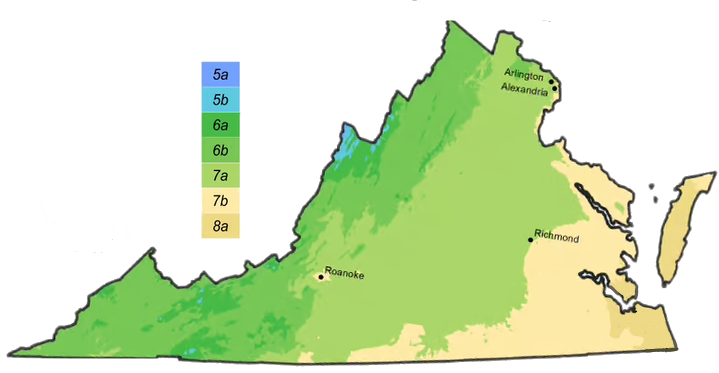
Hardiness Zone
5,
6,
7,
8
Commercially available
Yes
Global Biodiversity Information Facility (GBIF):
Additional Info
Has been blamed for hay fever, but its irritating symptoms are actually caused by ragweed (Ambrosia species), whose pollen is airborn when goldenrod is in flower. This speices does not spread as rapidly or aggressively as some other goldenrods
Wildlife Value: This plant supports Wavy-lined Emerald larvae. Flowers are attractive to butterflies, bees, and other pollinators. Songbirds eat the seeds. Members of the genus Solidago support specialized bees. Plant NOVA Natives lists this species as particularly popular with the non-native honeybees
Flower Color
Gold/Yellow
Flower Prominence
Conspicuous
Bloom Time
Fall
Bloom Month
October
November
Light Requirements
Full sun
Partial sun
Moisture Requirements
Moist
Dry
Low Maintenance
Yes
Deer Resitant
Yes
Seed or Fruit eaten by wildlife?
Yes
Pollinators
Bees
Butterfiles
Monarchs
Top 30 for Butterfly and Moth Caterpillars?
Yes
Number of Lepidotera Species Genus Supports
115
Top 30 for Pollen Specialist Bees?
Yes
Number of Pollen Specialist Bees that Rely on this Genus
42
Carries Seeds (may not be available)
Additional links