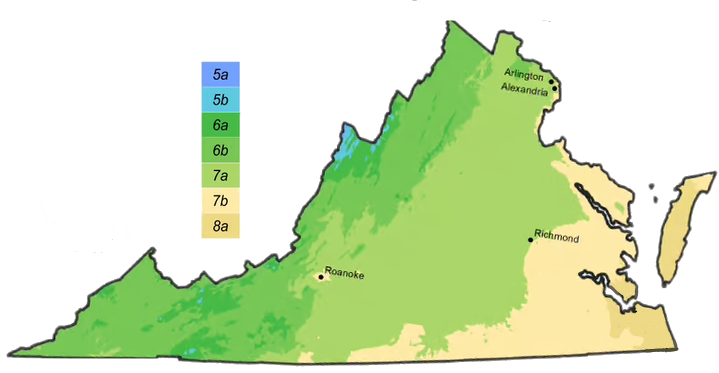
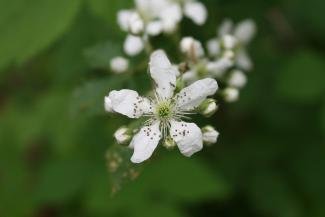
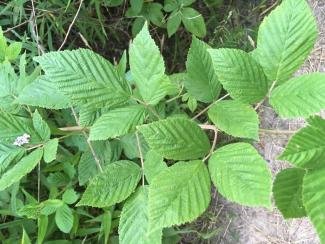
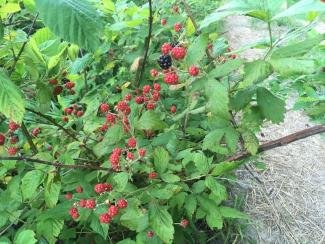
Habitat: Mesic to dry forests, woodlands, barrens, clearings, old fields, pastures, and road banks. Common in the mountains; frequent in the inner Piedmont; infrequent to rare in the outer Piedmont and Coastal Plain. This is the most common highbush blackberry in the Virginia mountains, occurring primarily from 300 m (1000 ft) to over 1600 m (5250 ft) elevation.
Wildlife Value: The nectar and pollen of the spring flowers attract many kinds of insects, especially long-tongued and short-tongued bees. Butterflies are also attracted to the blooms. The plant provides excellent cover year-round and the fruits are relished by songbirds, small mammals, foxes, raccoons and black bears. During the winter, birds and small mammals eat the seeds left from rotten fruit. White-tailed deer and rabbits browse the leaves, although the plant is moderately resistant to damage from deer. Dead stems are used by stem-nesting bees.
Edibility: Fruits are edible. The fruit is seedy and has a sweet flavor when fully ripened. Eaten fresh or preserved or frozen. Often made into pies, syrups, jams, or other desserts.