Non-native plants this species can replace:
Common Name
Gray dogwood
Plant Form
Shrubs & Small Trees
Duration
Perennial
Max Height (ft)
15.0
Width (ft)
10.0 -
15.0
Growth Rate
Slow
Region
Coastal
Piedmont
Mountain
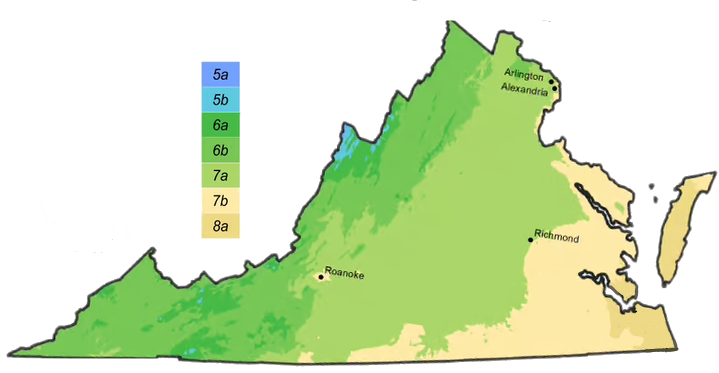
Hardiness Zone
5,
6,
7,
8
Commercially available
Yes
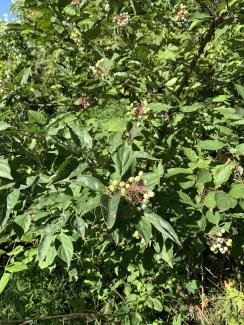
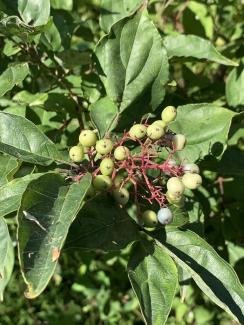
Global Biodiversity Information Facility (GBIF):
Additional Info
Habitat: open wooded floodplains, forested wetlands, shrub swamps, stream borders, rocky woods or ledges, fencerows
Wildlife Value: The flowers attract bees and butterflies for pollen and nectar. Birds eat the berries. Ring-Neck Pheasant and Bob Whites like to eat the seeds and buds. The White-Tailed Deer and rabbits will browse the leaves and branches. The plant serves as a nesting site and shelter for birds and small mammals.
Notes: Suckering, spreads to form a thicket. The plant will colonize if the suckers are not removed. Plant NOVA Natives lists this species as particularly popular with the non-native honeybees
Flower Color
Cream/White
Gold/Yellow
Flower Prominence
Conspicuous
Bloom Time
Spring
Early Summer
Fall Color
Burgandy/Red
Purple
Light Requirements
Full sun
Partial sun
Shade
Moisture Requirements
Moist
Soil Texture
Clay
Loamy
Sandy
Low Maintenance
Yes
Climate-smart plant
Yes
Good Choice for Public Spaces
Yes
Deer Resitant
Yes
Seed or Fruit eaten by wildlife?
Yes
Pollinators
Bees
Butterfiles
Top 30 for Butterfly and Moth Caterpillars?
Yes
Number of Lepidotera Species Genus Supports
98
Top 30 for Pollen Specialist Bees?
Yes
Number of Pollen Specialist Bees that Rely on this Genus
4
Nurseries that may carry live plant