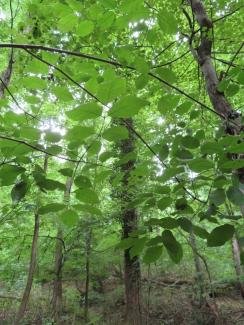
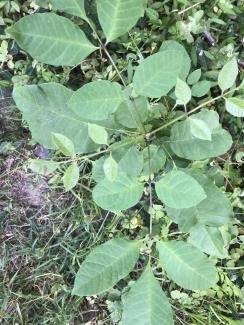
Habitat: Deciduous tree in the olive family. White ash grows best in rich, moist soils with good drainage but will grow in any type of sun exposure—full sun to shade—and in any soil and pH. Ash trees have male and female flowers on separate trees and only the female flowers develop into fruits
Wildlife value: Supports the larvae of Eastern tiger swallowtail and mourning cloak butterflies. The adult Eastern Tiger Swallowtail butterflies feed on milkweed, joe pye weed, wild cherry, and lilac. The seeds of the White ash are enjoyed by birds, squirrel, and other small mammals. The bark is eaten by rabbits, porcupines and beavers. The foliage is browsed by white-tailed deer.
Notes: It usually grows rapidly to 60 to 90 feet tall and 50 to 75 feet wide with a 2 to 3-foot trunk diameter, but it can reach 120 feet in height and is the largest of the native ashes. The juice from leaves relieves the swelling and itching of mosquito bites. Planting new ash trees is no longer recommended due to the trees' susceptibility to the emerald ash borer, a pest that feeds under the bark and bores into the wood