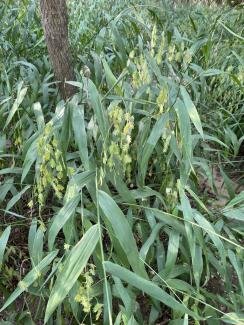
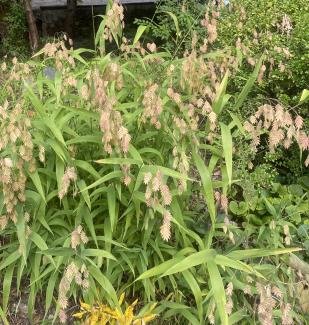
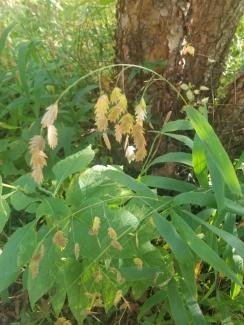
Chasmanthium latifolium (Native)

Non-native plants this species can replace:
Common Name
River oats
Indian wood oats
Inland sea oats
Wild oats
Wood-oat
Northern sea oats
Plant Form
Grasses, Sedges & Rushes
Duration
Perennial
Max Height (ft)
5.0
Width (ft)
1.0 - 2.0
Growth Rate
Medium
Region
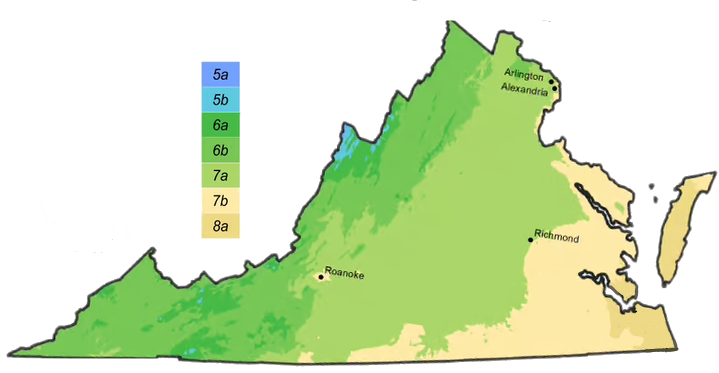
Coastal
Piedmont
Mountain
Hardiness Zone
5, 6, 7, 8
Commercially available
Yes

Photographer: ragstate
Licensed under: CC BY-NC 4.0
Original photo: Original photo

Photographer: frogmeister
Licensed under: CC BY-NC 4.0
Original photo: Original photo

Photographer: nancyyinger
Licensed under: CC BY-NC 4.0
Original photo: Original photo

Additional Info

Habitat: Well-drained floodplain forests, hummocks of alluvial swamps, rocky or sandy river shores and bars, and riverside prairies; less frequently in tidal swamps, periodic seepage areas of mafic and calcareous woodlands and barrens, and mesic to dry-mesic upland forests near streams or rivers. Locally common throughout the mountains (low elevations), piedmont and inner coastal Plain; rare in the outer coastal Plain.

Wildlife value:  Highly resistant to deer. This is a larval host plant for Northern Pearly-Eye (Lethe anthedon) caterpillars. Also a larval host plant to several skipper butterflies. Small mammals and birds are attracted to the seeds.

Notes: Clump-forming, upright ornamental grass that is easy to grow. It is easily grown in moist to wet well-drained soils in part sun to part shade. It is fairly tolerant of shade, especially for an ornamental grass.  Can be a bit weedy as it self seeds easily.

Flower Color
Brown
Green
Purple/lavender
Flower Prominence
Conspicuous
Bloom Time
Spring
Early Summer
Late Summer
Fall
Bloom Month
June
July
August
September
October
Fall Color
Brown/Copper
Gold/Yellow
Light Requirements
Partial sun
Shade
Moisture Requirements
Wet
Moist
Soil Texture
Clay
Loamy
Sandy