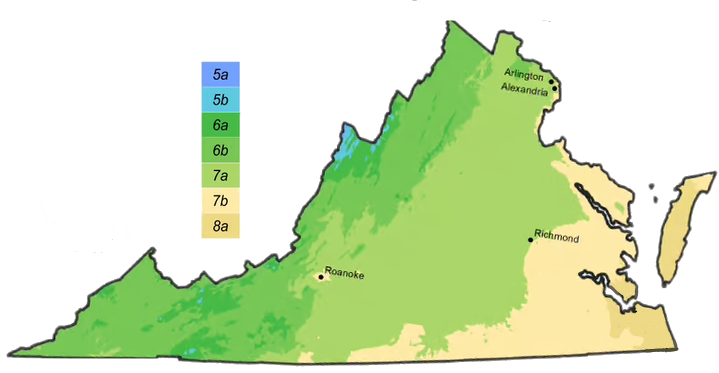
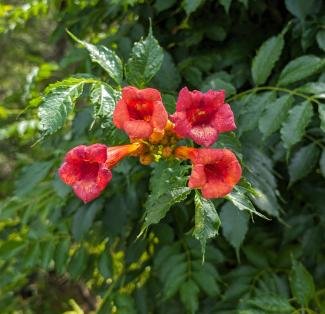
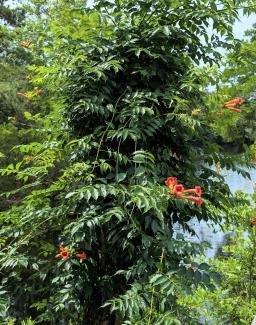
Dense, vigorous, woody, deciduous, perennial vine in the trumpetvine family (Bignoniacea) that attaches itself to structures and climbs by aerial rootlets. Floodplain forests, swamp forests (alluvial, nonriverine, tidal, and maritime), maritime forests, dune woodlands and scrub, various upland forests, rocky and sandy woodlands, old fields, and fencerows. Common throughout except in the higher mountains.
It blooms on new growth, so early spring pruning will not affect the flowering. Vines must be grown on sturdy structures because mature plants produce considerable weight. They sucker profusely from underground runners and freely self-seed, often forming impenetrable colonies that can choke out other plants. To keep it in check, plant it near concrete or an area that you can mow; mowing down the suckers will discourage them.
Fire Risk: This plant has an extreme flammability rating and should not be planted within your home's defensible space.
Wildlife Value: The flowers are attractive to hummingbirds which are the principal pollinator of this plant. White-tailed deer and rabbits eat the foliage.
Warning: Contact with the leaves and flowers of trumpet creeper results in skin redness and swelling among mammals. It is also slightly toxic if ingested.