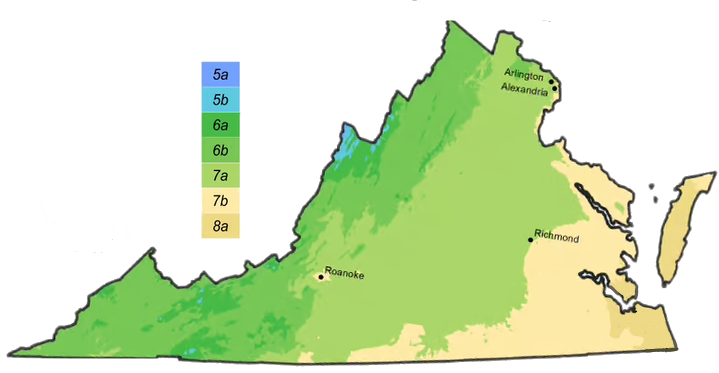
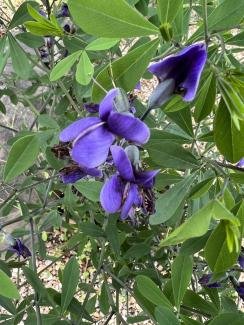
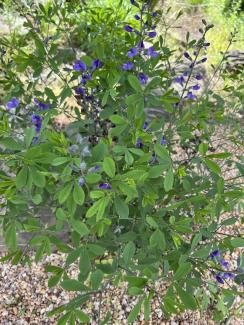
Baptisia australis (Native)

Common Name
Blue wild indigo
False blue indigo
Plant Form
Herbs
Duration
Perennial
Max Height (ft)
3.0
Region
Coastal
Piedmont
Mountain
Hardiness Zone
5, 6, 7, 8, 9
Commercially available
Yes
Rabbit resistant
Yes

Photographer: amirazadfrooz
Licensed under: CC BY-NC 4.0
Original photo: Original photo

Photographer: amirazadfrooz
Licensed under: CC BY-NC 4.0
Original photo: Original photo

Additional Info

Due to the rarity and sensitivity of habitat in Virginia, these species are recommended for horticultural use only. Planting these species in natural areas could be detrimental to the survival of native populations.

Habitat: rich open woods, alluvial thickets, stream banks, sandy floodplains

Wildlife Value: Its flowers are attractive to butterflies, bees, and other insects. This plant is also a larval host plant for a variety of butterflies including: Orange sulphur, Clouded Sulphur, Frosted Elfin, Eastern Tailed Blue, Hoary Edge, and Wild Indigo Duskywing.

Salt and drought tolerant. Late May - June blue blooms. Nice foliage. Neat-and-tidy. Slowly spreads sideways from seeds dropped below the plant.. Can take up to three years to reach full size. Rabbit resistant. Attractive foliage. Deep root system, hard to move.

Flower Color
Blue
Cream/White
Gold/Yellow
Purple/lavender
Flower Prominence
Conspicuous
Bloom Time
Spring
Early Summer
Late Summer
Bloom Month
May
June
Light Requirements
Full sun
Partial sun
Moisture Requirements
Moist
Soil Texture
Clay
Low Maintenance
Yes
Climate-smart plant
Yes
Good Choice for Public Spaces
Yes
Deer Resitant
Yes
Seed or Fruit eaten by wildlife?
Yes
Pollinators
Bees
Butterfiles
Hummingbirds