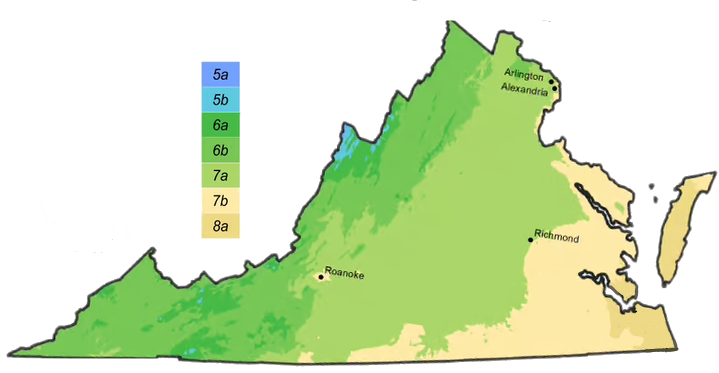
Habitat: Rocky open woodlands, barrens, and exposed outcrops at middle to high elevations, shrub balds, bogs, fens, seeps, seepage swamps, and montane depression ponds; occasionally in upland forests; occurs on both acidic sedimentary and mafic outcrops. Frequent in the mountains; infrequent in the piedmont; infrequent to rare in the coastal Plain. It is both strange and noteworthy that most populations of this species in Virginia occur either in xeric, rocky habitats or in wetlands, spanning the full range of substrate chemistry in both.
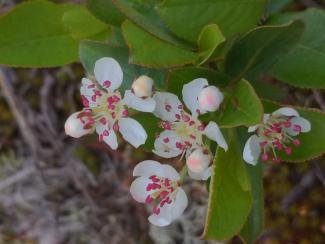
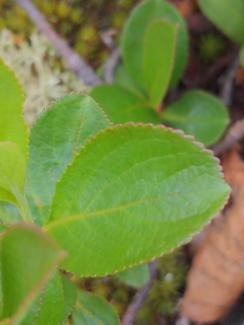
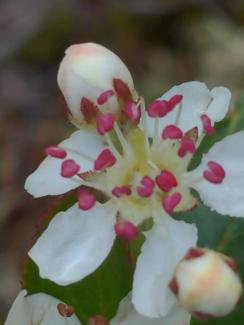
Mounding shrub up to 6 feet tall and wide (smaller cultivars are available). Beautiful white flowers in May and long-lasting black berries in the fall. Tolerates most soil conditions including compaction, some salt, some flooding, even pruning. Red-purple fall foliage. Suckering. Can form large colonies. Tough.
Wildlife Value: Fruits attract birds, butterflies, and other pollinators. The primary pollinators are small bees.
Edibility: Fruits are edible but quite astringent, hence the common names, so make into jams or jellies.