Non-native plants this species can replace:
Common Name
New york ironweed
Plant Form
Herbs
Duration
Perennial
Max Height (ft)
8.0
Growth Rate
Medium
Region
Coastal
Piedmont
Mountain
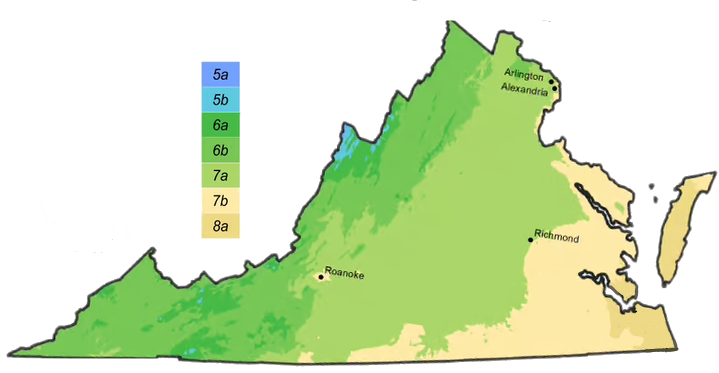
Hardiness Zone
5,
6,
7,
8,
9
Commercially available
Yes
Global Biodiversity Information Facility (GBIF):
Additional Info
This low maintenance wildflower naturalizes easily and is adaptable to garden conditions. Plant prefers rich moist acidic soils but will grow in average moist to wet soils in full sun. If a shorter plant is desired, prune it back in spring to about 2 feet. It is attractive if blooming occurs at different heights, so prune to different heights for this effect.
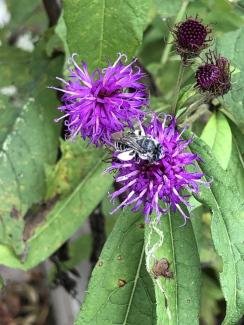
Wildlife value: Flowers are attractive to butterflies, bees and other pollinators. Songbirds eat the seeds. Members of the genus Vernonia support specialized bees. Host plant for American Lady (Vanessa virginiensis) butterfly larvae.
Flower Color
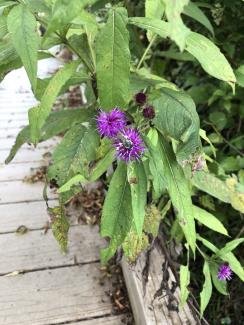
Purple/lavender
Flower Prominence
Conspicuous
Bloom Time
Late Summer
Fall
Bloom Month
August
September
October
Light Requirements
Full sun
Partial sun
Soil Texture
Clay
High organic matter
Loamy
Low Maintenance
Yes
Climate-smart plant
Yes
Deer Resitant
Yes
Seed or Fruit eaten by wildlife?
Yes
Pollinators
Bees
Butterfiles
Hummingbirds
Monarchs
Top 30 for Pollen Specialist Bees?
Yes
Number of Pollen Specialist Bees that Rely on this Genus
12
Tolerates
Carries Seeds (may not be available)
Additional links