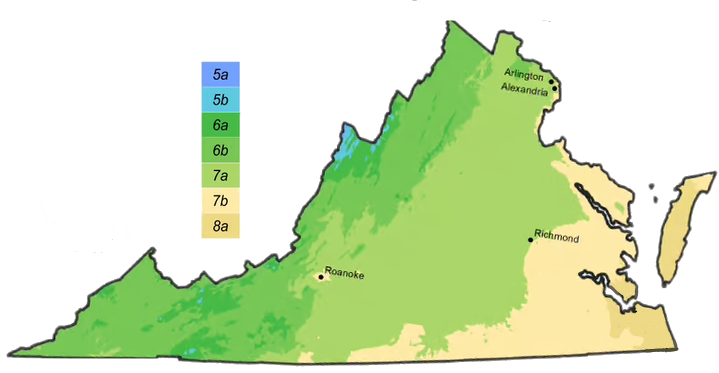
Habitat: Trumpet honeysuckle grows in medium moisture, well-drained, neutral to acidic soils in full sun. It will grow in some shade, but best flowering is in full sun. It likes humus-rich soils. It is native to DC, common in DE, and clustered mainly in the extreme southwestern corner of PA. In VA, it is frequent in the Coastal Plain and Piedmont and infrequent in the mountains.
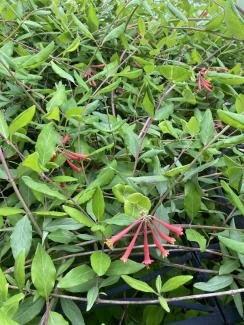
Wildlife Value: Its flowers are attractive to hummingbirds, bees, butterflies and some moth pollinators. The small red berries are eaten by songbirds. The foliage may be eaten by white-tailed deer. It is a nectar source of Ruby-throated Hummingbirds and a larval host for the Spring Azure Butterfly and the Snowberry Clearwing Moth.
Fire Risk: This plant has an extreme flammability rating and should not be planted within the defensible space of your home.
Notes: Low maintenance and showy, Trumpet Honeysuckle blooms intermittently until frost with coral flowers and red fruit present together. Can be used in container garden with big trellis. Flowers on new growth, so avoid pruning until after flowering.