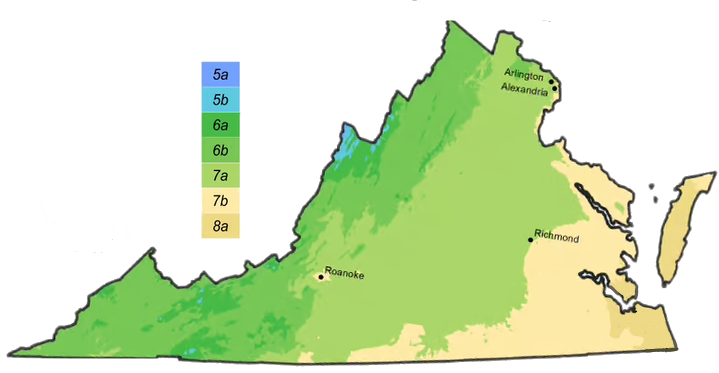
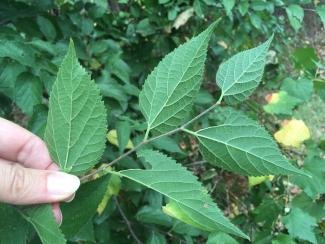
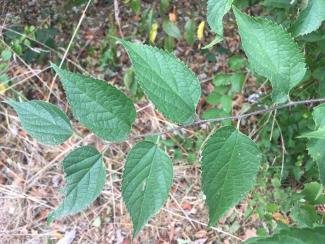
Habitat: drainage basins, mature floodplains, wooded slopes or high rocky limestone bluffs bordering streams, windbreaks
Wildlife value: This tree makes a perfect addition near your butterfly garden, as it is a host plant for the larvae of several butterflies. Wild turkey, ring-necked pheasant, quail, grouse, lesser prairie chicken, cedar waxwing, robins, and other bird species consume common hackberry fruit, which persist throughout the winter. Small mammals also consume the fruit. Deer will browse
common hackberry leaves in the absence of preferred browse species. It also provides cover and nesting for birds. Cover is also provided for game birds, rabbits, and deer by the young stands.
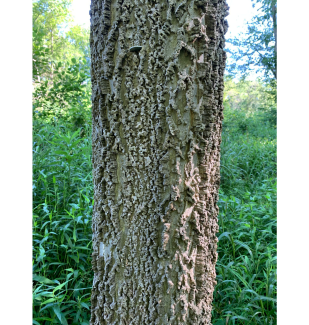
Notes: drought tolerant; tolerates occasional flooding and drought; saplings can sprout in deep shade, common on limestone soils; unique warty bark. Common hackberry is included in windbreak plantings to control wind erosion. Additionally, its deep root system makes common hackberry useful for preventing soil erosion on disturbed sites