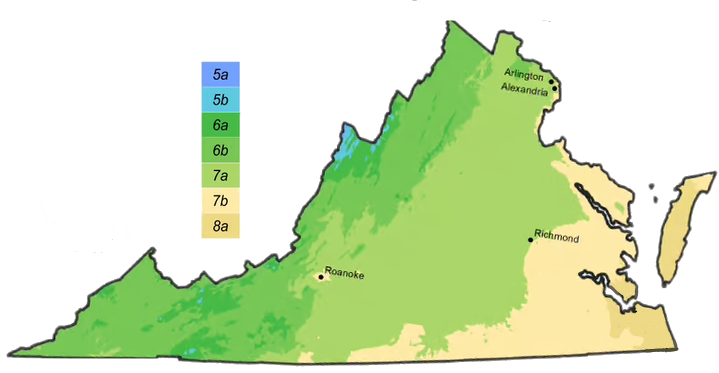
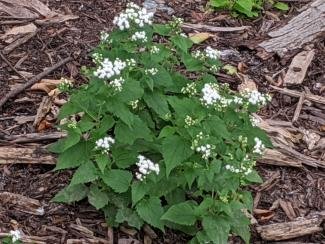
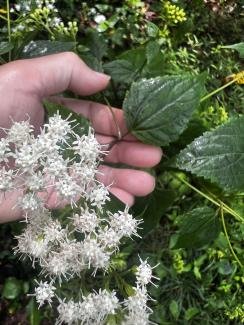
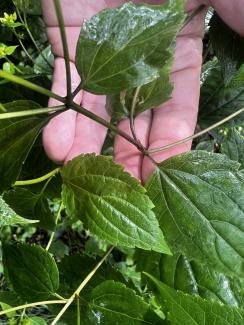
Habitat: Mesic to dry-mesic upland forests, especially cove forests and rich montane oak-hickory forests; less numerous but widespread in dry forests and woodlands (especially over calcareous or mafic rocks), well-drained alluvial forests, clearings, and more open, disturbed habitats. Common in the mountains; frequent in the Piedmont; infrequent in the inner Coastal Plain; rare in the outer Coastal Plain.
Wildlife Value: Flowers are attractive to butterflies, especially smaller species, and other pollinators, including leaf-cutting bees. Songbirds eat the seeds.
Poisonous to Humans
Poison Severity: High
Poison Symptoms: The plant is highly toxic and may be fatal if eaten. Toxicity is characterized by weakness, nausea, abdominal pain, vomiting, delirium, cardiac damage, prostration and eventually, coma. Even drinking milk from cows that have eaten the plant will cause "milk sickness" and vomiting